| Weight | 1,41 kg |
|---|---|
| Dimensions | 24,5 × 29 cm |
| Pages | 220 |
| Binding | Paperback with flaps |
| Illustrations | 80 in colour |
| Language | Italian/English |
| ISBN | 9788874618293 |
| Year |
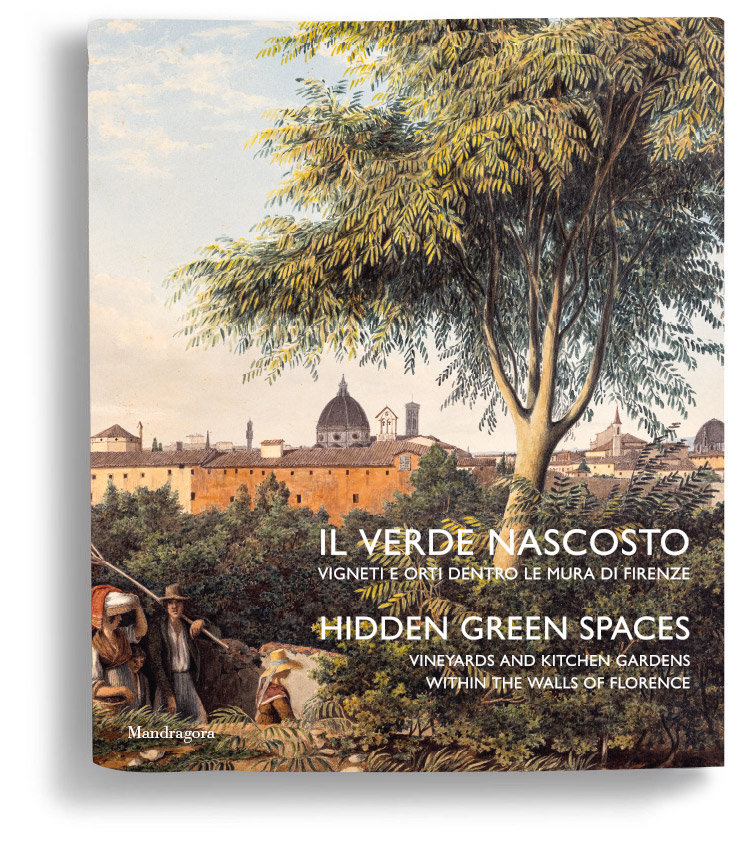
Hidden green spaces Vineyards and kitchen gardens within the walls of Florence
Miscellaneous, Newsedited by Valentina Zucchi, Désirée Cappa
essays by Daniele Angelotti, Gianluca Belli, Mario Bencivenni, Désirée Cappa, Francesca Carrara, Zeffiro Ciuffoletti, Giuseppina Carla Romby, Valentina Zucchi
Florence has developed over the centuries through a close relationship between its urban fabric and the cultivated spaces that have accompanied its growth. Kitchen gardens, vineyards, gardens, orchards and cultivated plots were an integral part of the city and of its inhabitants’ daily lives. They were found both within and beyond the city walls, alongside palaces, churches, convents and streets, contributing to the urban fabric, the economy and the life of the community.
This volume reconstructs the city’s cultivated landscape through meticulous research into historical records. In the first half of the 19th century, green spaces occupied a significant portion of the urban area, with numerous plots devoted to kitchen gardens, vineyards, orchards and other forms of cultivation. The more than 1,800 plots recorded as kitchen gardens in the 19th-century land registry convey the sheer scale of a presence that profoundly shaped Florence. They reveal a city in which green spaces played a tangible, everyday role, closely bound up with work, production, the care of the land and the relationships between people.
Reconstructing the history of its former kitchen gardens and vineyards helps us trace the changes that have taken place over time and recognise the value of the surviving traces that continue to bear witness to the history and identity of Florence’s different neighbourhoods.
Eur 30,00